The Hjaija catchment is located in the Northern Jordan Valley and spans from the hills of the eastern escarpment to the Valley. Several springs emerge at the escarpment foothills, fed by rainfall infiltration from the Ajloun highlands. The area around the springs is used for grazing and olive cultivation. The springs water is distributed among farmers for irrigation. The karstified limestone setting likely allows rapid aquifer recharge and quick response to rainfall, but also increases vulnerability to pollution.
Downstream, slopes gradually flatten into the Valley, where agriculture dominates. Rainfed cereals cover the valley bottom, while olive trees, vegetables, and fruits are cultivated closer to the foothills. The area is underlain by recent alluvial deposits, forming deep, weakly developed soils prone to erosion. Concentrated flows in gentler slopes have caused severe gully formation, transporting sediment downstream into the Jordan River and affecting water quality.
Hjaija catchment
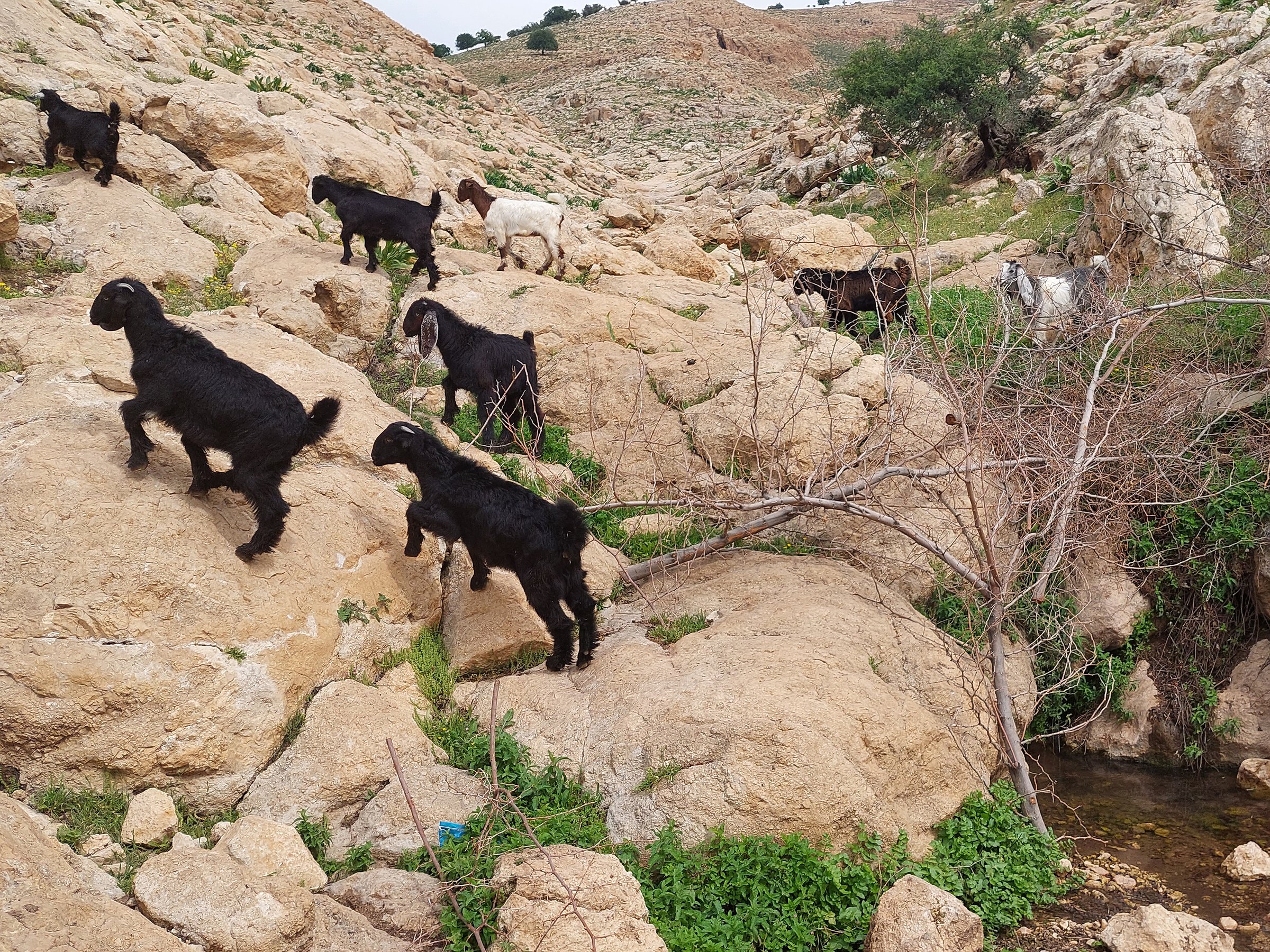
Goats drinking from the spring

Hjaija catchment
Old olive tree upstream in the catchment

Hjaija catchment
Spring water collection point