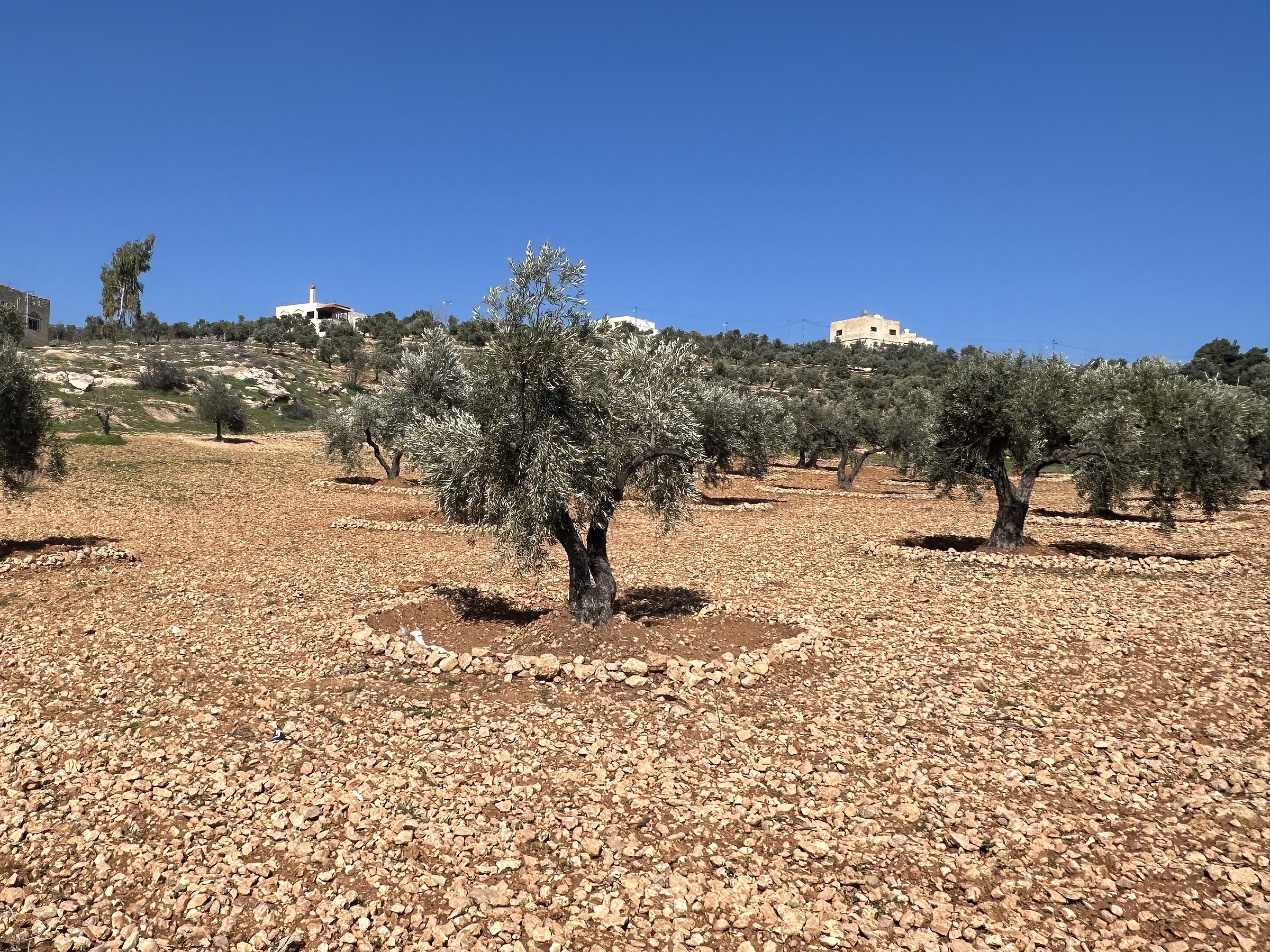
The Rihab area, characterized by its hilly terrain and thriving olive plantations, presents unique opportunities and challenges for sustainable water management. The slopes cause water to run off quickly, but through simple and robust interventions, water can be effectively captured and retained at the roots of the olive trees, ensuring their growth and productivity. This pilot project in Rihab serves as an excellent example of combining analytical insights with practical, locally-driven implementation. The area was chosen as a testing ground for easy-to-implement interventions, aimed at addressing water runoff issues while enhancing agricultural productivity.
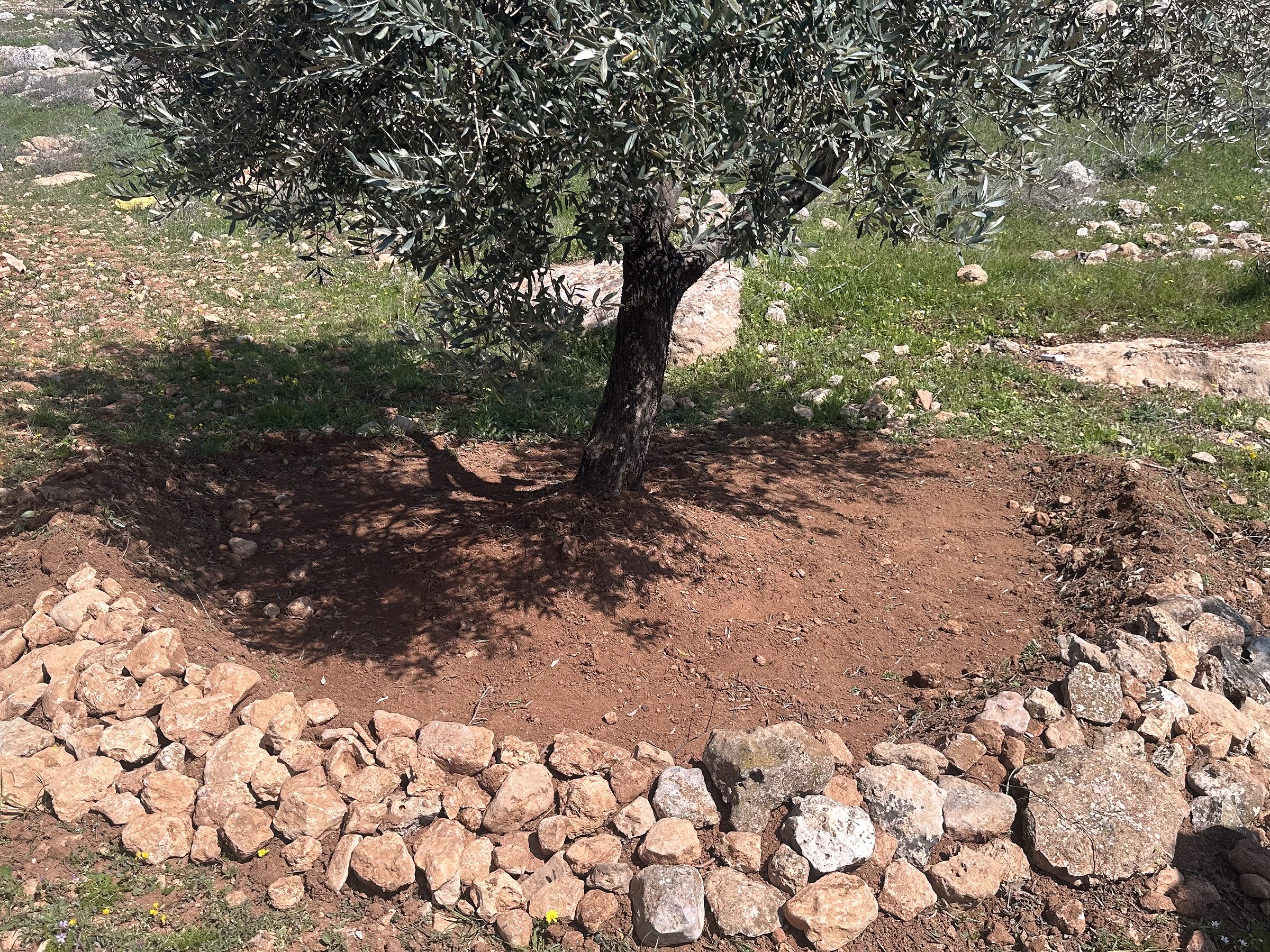
To identify the most effective 3R interventions and their optimal locations, suitability mapping was applied. Data on various parameters, including rainfall, slope, and soil type, were collected and analyzed. For four specific interventions, these parameters were classified into suitability categories. Additionally, local experts assigned weights to these parameters based on their degree of influence. This process concluded that semi-circular bunds are the most suitable intervention for olive plantations on sloping lands in Rihab.
Rihab
Tree with semi-circular bund
Rihab
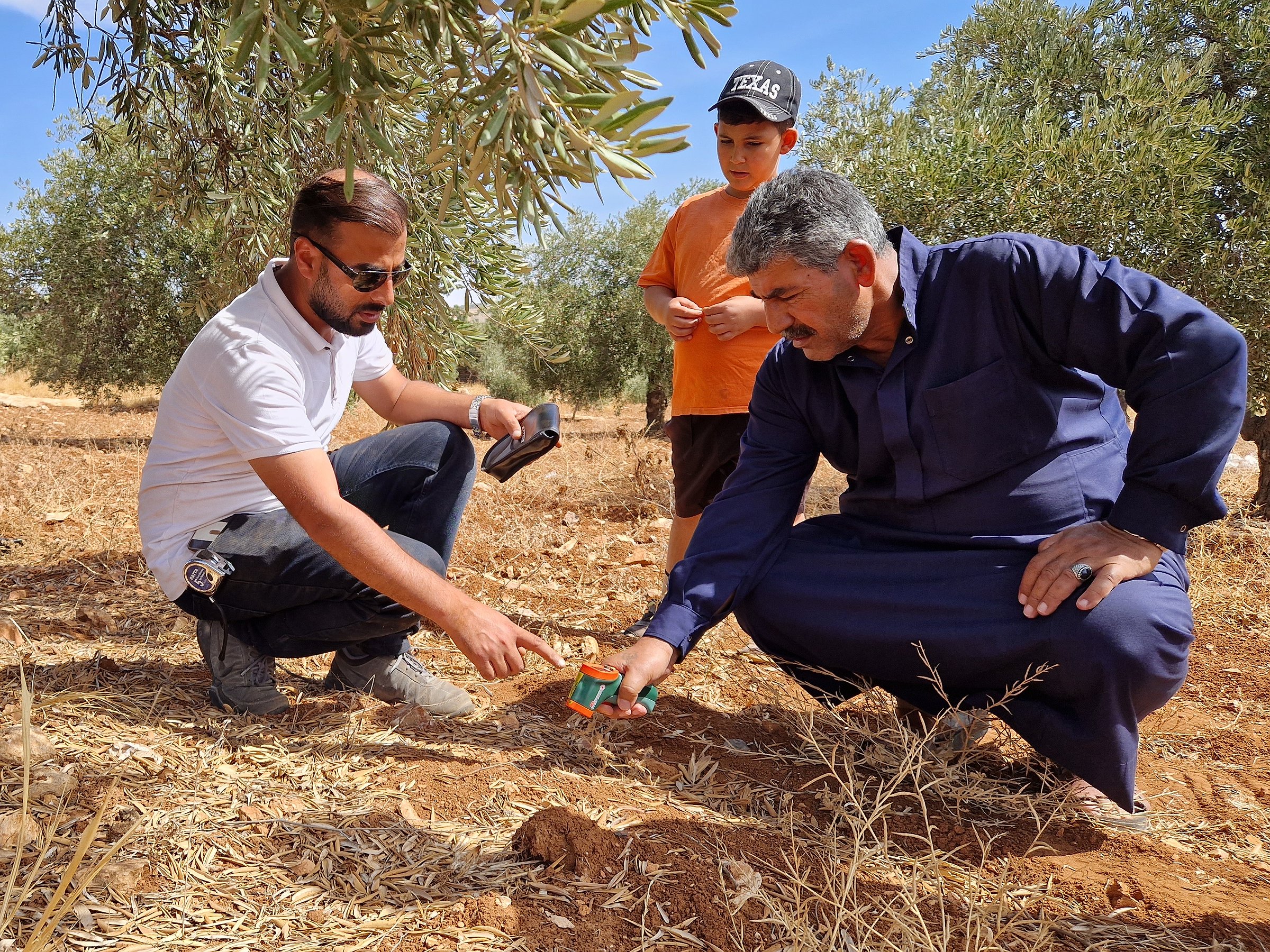
Explaining farmers how to measure leaf temperature
Rihab
Olive trees with semi-circular bunds
Rihab
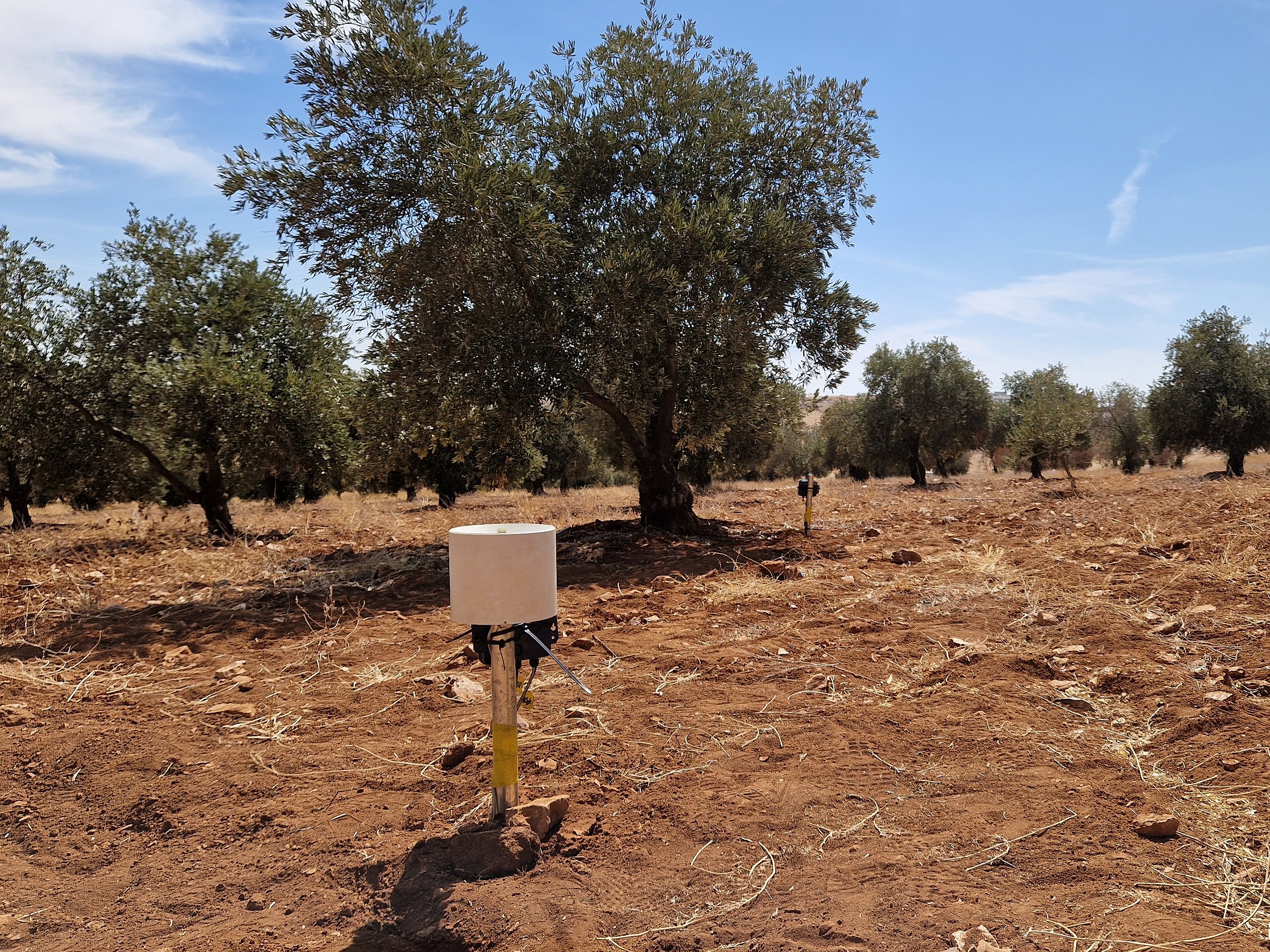
Rain gauge installed near olive tree